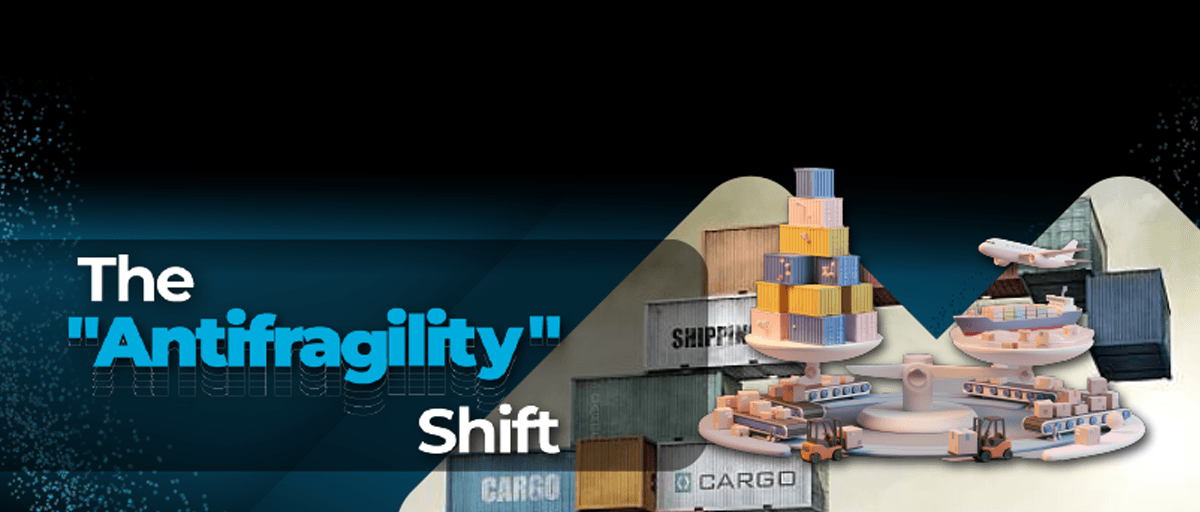
In the 2026 logistics market, the concept of Antifragility (a term coined by Nassim Nicholas Taleb) has become the gold standard for high-performing supply chains. While most companies strive for resilience, the industry leaders are aiming for antifragility.
Here is a breakdown of what makes a supply chain antifragile and why it’s a trending topic:
Fragile vs. Resilient vs. Antifragile
To understand the concept, it helps to see where a company sits on the spectrum of handling stress:
Fragile: Systems that break easily under pressure. They rely on "perfect" conditions (e.g., lean, just-in-time models with no room for error). When a port closes, the whole system stops.
Resilient: Systems that resist shocks and return to their original state. If a disruption occurs, they "bounce back." This is good, but it means the company hasn't actually improved from the experience.
Antifragile: Systems that get better because of shocks. Like a human muscle that grows stronger after being stressed at the gym, an antifragile supply chain uses disruptions as "fuel" to find better routes, better suppliers, and more efficient processes.
The Mechanics of Antifragility in 2026
In practical terms, building an antifragile network involves three core shifts:
Intentional Redundancy: In 2026, "efficiency" is no longer the only goal. Antifragile chains keep "strategic buffers"—extra inventory or multiple shipping routes—so that when one path fails, they don't just survive; they capture market share while competitors are stuck.
Decentralized Decision-Making: Instead of waiting for a "Global Command Center" to approve a change, local hubs are empowered with AI tools to make instant decisions. This allows the system to adapt locally to a shock before it spreads globally.
The "Feedback Loop" Culture: Antifragile companies treat every late shipment or customs delay as a data point. They use AI to "stress-test" their own systems (a practice known as chaos engineering) to find weaknesses before a real crisis does.
How do you build it?
1️⃣ Embrace Redundancy: Stop calling it "waste." Strategic buffers and multi-sourcing are the insurance policies that allow you to keep moving while others stop.
2️⃣ Empower the Edge: Use AI to give local teams the autonomy to reroute shipments instantly. Centralized bottlenecks are the enemies of speed.
3️⃣ Learn from the Pain: Treat every disruption as a "vaccine." Use the data from today’s delay to automate tomorrow’s solution.
The volatility of 2026 is a permanent feature, not a bug. The question is: are you waiting for the storm to pass, or are you learning how to sail faster because of the wind?
For years, we’ve talked about building resilient supply chains—systems that can "bounce back" from a crisis. But in today’s world of constant geopolitical shifts and climate volatility, just returning to the status quo isn't enough.
The new target? Antifragility.
An antifragile supply chain doesn’t just withstand a shock; it actually gets stronger because of it.
Think of it like this: ❌ Fragile: Breaks under pressure (The "Lean" model of 2019). 🟡 Resilient: Resists the shock and recovers (The "Safe" model of 2024). ✅ Antifragile: Thrives on disorder and grows (The "Winner" model of 2026).
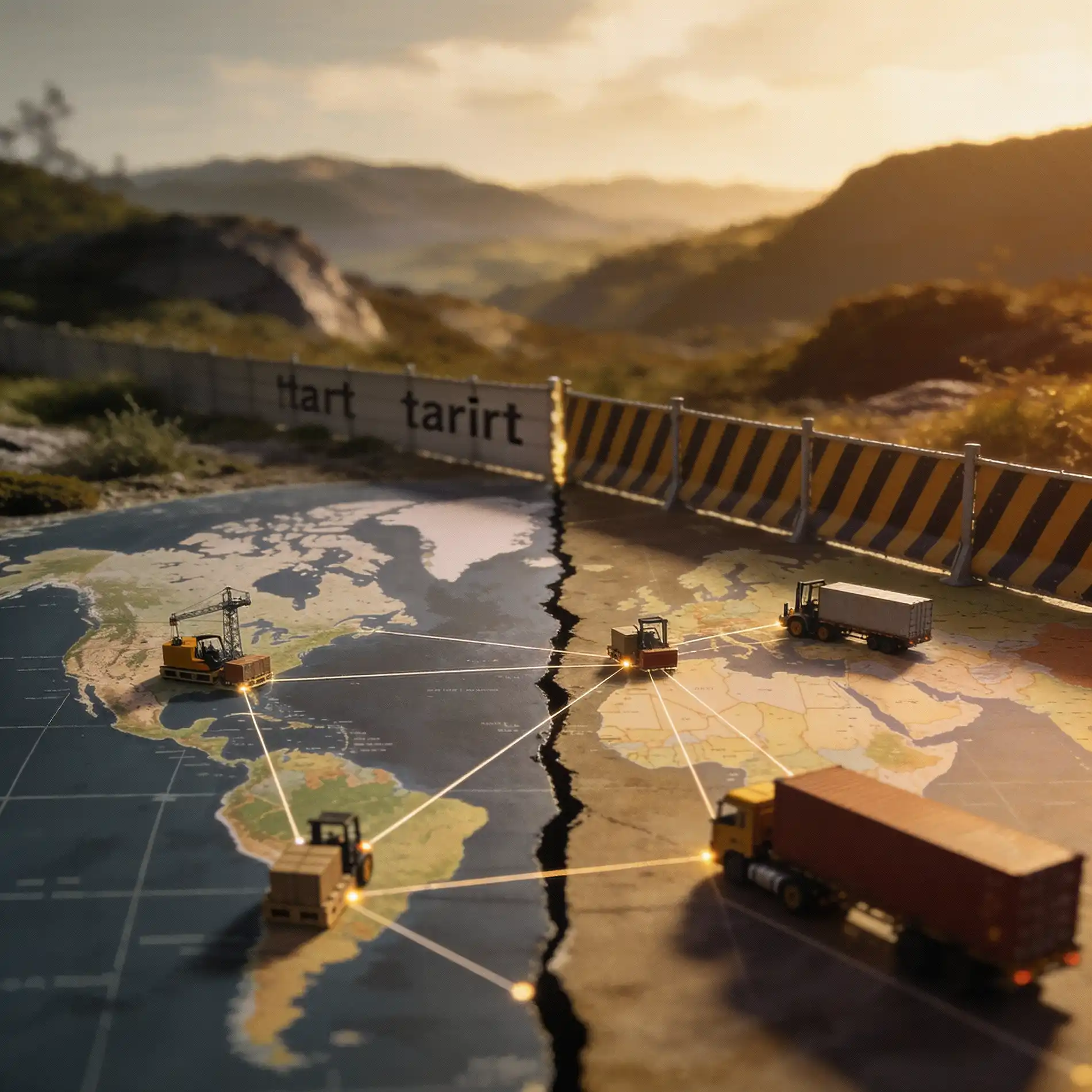
In 2026, "Geopolitical Turbulence" has moved from being a series of unfortunate events to a permanent operating condition. For logistics professionals, this means the map you use to plan your routes is essentially "live," with borders and trade rules shifting in real-time.
Here is a deeper dive into the four critical pillars of geopolitical turbulence as they stand today: